


CAS: 2763-96-4
Muscimol Isolate
Muscimol Isolate
Need a larger order? Contact us at 602-499-3810
Couldn't load pickup availability
Muscimol Isolate
Muscimol is an isoxazole-derived compound historically associated with Amanita muscaria and related fungal species. This material is manufactured through controlled synthetic chemistry to support analytical consistency, purity, and batch reproducibility.
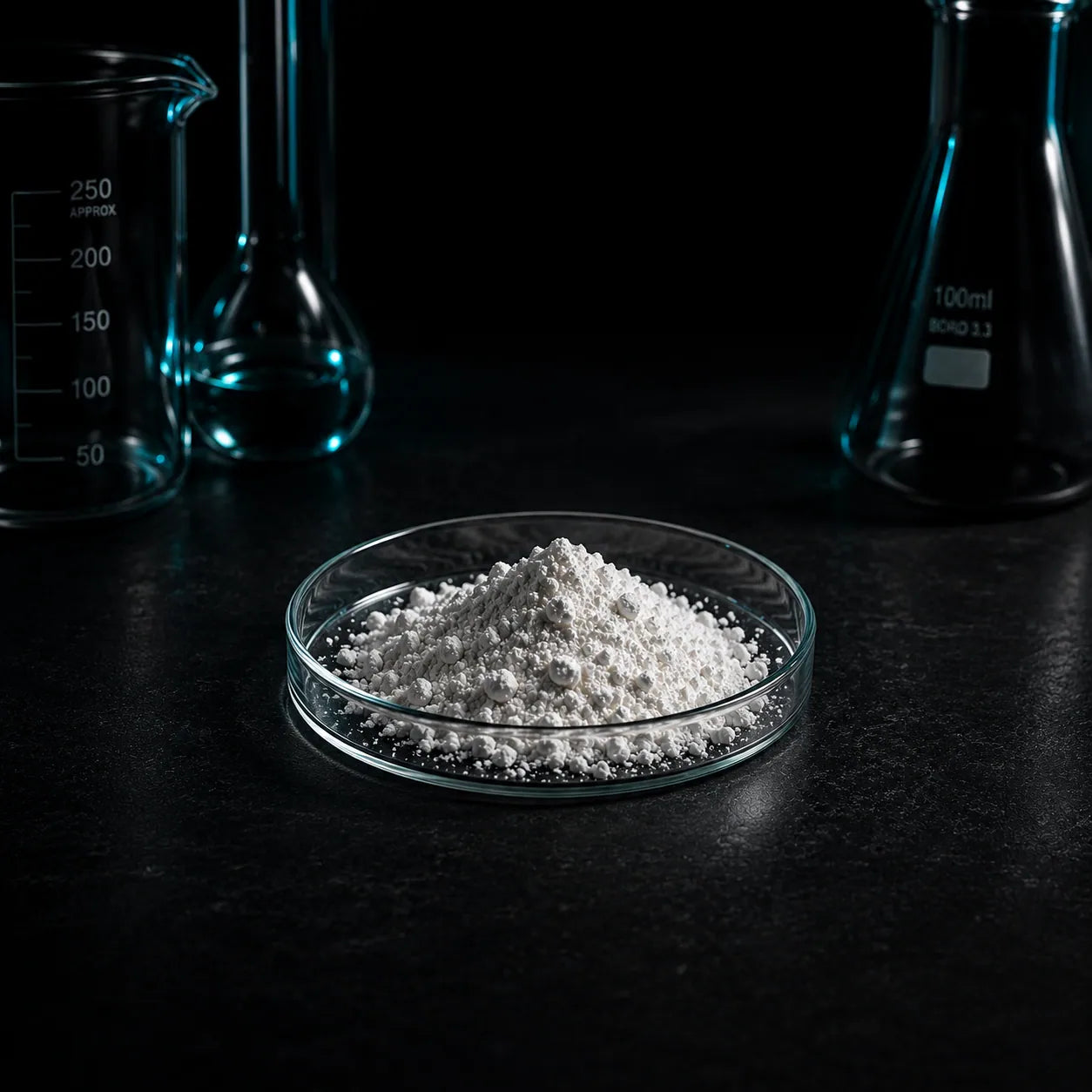
Supplied in powder form, the compound undergoes third-party analytical verification for identity, composition, and batch-specific quality documentation.


ANALYTICAL DATA
Properties & Technical Specifications
High-purity muscimol manufactured through controlled synthetic chemistry and verified through third-party analytical testing.
VERIFICATION & DOCUMENTATION
Documentation & Verification
Batch-specific analytical documentation and handling information are available to support material verification and reference review.
Certificate of Analysis
View batch-specific analytical verification including purity, composition, and marker evaluation data.
Laboratory Disclaimer
Reference documentation outlining handling guidance, intended use limitations, and material notice information.
Batch Verification
Contact our team regarding batch-specific verification, analytical documentation, or material inquiries.
Storage & Handling
Review recommended storage conditions and general handling guidance for maintaining material integrity.
Material FAQ
What is muscimol?
Muscimol is an isoxazole-derived compound historically associated with Amanita muscaria and related fungal species. This material is manufactured through controlled synthetic chemistry to support analytical consistency and batch reproducibility.
Learn more about muscimol and its research background.
Is this material synthesized or naturally extracted?
This material is manufactured through controlled synthetic chemistry to support analytical consistency, batch reproducibility, and standardized material characterization.
Muscimol is historically associated with Amanita muscaria and related fungal species, where it naturally occurs alongside other compounds including ibotenic acid and muscarine.
Learn more about Amanita muscaria chemistry and alkaloid composition.
How does muscimol interact with GABA-A receptors?
Muscimol is studied for its interaction with GABA-A receptors, a major class of inhibitory neurotransmitter receptors found throughout the central nervous system. Research literature describes muscimol as a selective GABA-A receptor agonist, which has made it a compound of interest in neuropharmacology and receptor-binding studies.
The pharmacological profile of muscimol differs substantially from classical serotonergic psychedelics due to its primary interaction with GABAergic signaling pathways rather than 5-HT2A receptor systems.
Read more about muscimol and GABA-A receptor interactions.
What is ibotenic acid?
Ibotenic acid is a naturally occurring compound historically associated with Amanita muscaria and related fungal species. It is structurally related to muscimol and is commonly discussed in scientific literature involving Amanita chemistry, neuropharmacology, and alkaloid composition.
Analytical evaluation of muscimol materials may include screening for ibotenic acid and related compounds as part of broader characterization and quality assessment protocols.
Learn more about ibotenic acid and its toxicological relevance.
How is the material verified?
Material verification may include analytical review of identity, purity profile, batch consistency, and related material characteristics as part of standard quality assessment procedures.
Verification protocols may vary depending on production requirements, analytical objectives, and batch-specific evaluation criteria.
Learn more about analytical testing methods used for muscimol materials.
What testing methods are used for analysis?
Analytical testing methods may include techniques such as High-Performance Liquid Chromatography (HPLC), Liquid Chromatography–Mass Spectrometry (LC-MS), Nuclear Magnetic Resonance (NMR), Fourier-Transform Infrared Spectroscopy (FTIR), and related laboratory instrumentation depending on analytical objectives and batch requirements.
These methods may be used to evaluate identity, purity profile, material consistency, and the presence of related compounds or impurities.
Learn more about analytical testing methods for muscimol materials.
What analytical markers are evaluated during testing?
Analytical evaluation may include review of identity, purity profile, material consistency, moisture content, residual solvents, and the presence of related compounds or impurities depending on the material specification and analytical objectives.
Testing protocols and reportable markers may vary between batches, production methods, and laboratory methodologies.
Learn more about analytical evaluation methods for muscimol materials.
Is batch-specific documentation available?
Batch-specific analytical documentation may be available for select materials depending on the production lot and testing protocol.
Available documentation may include analytical summaries, material characterization data, or Certificate of Analysis (COA) reporting where applicable.
View available Certificate of Analysis information.
How is purity evaluated?
Purity evaluation may involve analytical review of the material profile using laboratory instrumentation and validated testing methodologies depending on batch requirements and analytical objectives.
Reported purity values may reflect chromatographic analysis, spectroscopic characterization, or related analytical assessment procedures used during material evaluation.
Learn more about analytical testing methods for muscimol materials.
In what form is the material supplied?
Material is typically supplied as a refined laboratory-grade solid material intended for analytical, research, or reference applications.
Physical appearance, texture, particle characteristics, and packaging configuration may vary slightly between production lots and handling conditions.
Learn more about muscimol material characteristics and stability considerations.
How should the material be stored?
Materials should be stored in a cool, dry, and controlled environment away from excessive heat, moisture, direct light exposure, and incompatible substances.
Appropriate storage conditions may vary depending on packaging configuration, environmental factors, and intended analytical applications.
Review recommended storage and handling information.
Is muscimol federally legal in the United States?
Regulatory status may vary depending on jurisdiction, intended use, product classification, and applicable federal, state, or local laws.
Purchasers are solely responsible for determining the legality and regulatory status of materials within their jurisdiction prior to purchase, possession, transport, or use.
Learn more about the regulatory status of muscimol in the United States.
What is the intended use of this material?
Materials supplied by Muscimol Isolate are intended solely for lawful laboratory, analytical, educational, or research purposes unless otherwise explicitly stated.
Materials are not intended for human consumption, medical use, therapeutic use, dietary supplement use, veterinary use, or diagnostic applications.
Review our Legal Notice and intended use information.
Do analytical results vary between batches?
Analytical results may vary slightly between production batches due to differences in manufacturing conditions, analytical methodology, environmental factors, and material handling processes.
Batch-specific evaluation and quality review procedures are used to support material consistency and analytical characterization.
Review available batch-specific Certificate of Analysis information.
ANALYTICAL CONSISTENCY THROUGH CONTROLLED SYNTHESIS
Batch-Specific Verification Available
High-purity muscimol manufactured through controlled synthetic chemistry and supported by third-party analytical verification, batch-specific documentation, and material reference transparency.